How Rheological Additives Prevent Fluid Migration in Vertical Aerosol Lubricants
Vertical application creates a unique challenge for aerosol lubricant performance. Unlike horizontal surfaces, vertical components are continuously affected by gravity, which can cause liquid lubricants to move away from the intended lubrication area. This movement may reduce protection efficiency and increase the frequency of maintenance.
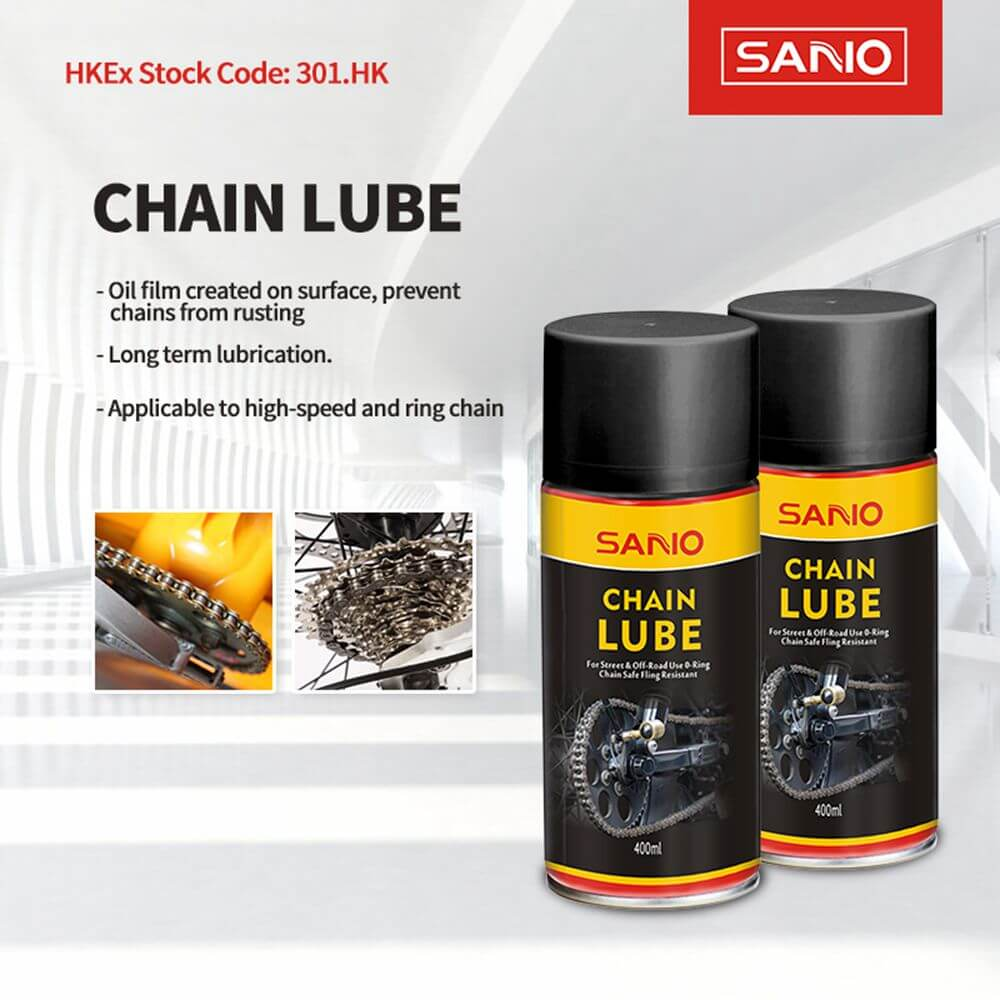
Effective aerosol lubricants depend on understanding fluid behavior changes during and after application—a focus of SANVO’s formulation studies. Rheological additives provide essential control over lubricant movement, allowing the product to spray effectively while maintaining a more stable position on vertical surfaces.
Why Fluid Migration Happens in Vertical Aerosol Lubricants
Fluid migration occurs when a lubricant cannot maintain enough resistance against external forces after application. On vertical surfaces, gravity creates a continuous downward force that can gradually pull the lubricant film away from the contact area.
Many aerosol lubricants are formulated with low-viscosity fluids because they need to penetrate small gaps and reach difficult mechanical areas. However, high fluid mobility can also increase the risk of unwanted movement after spraying.
This creates several practical problems:
Reduced lubricant coverage
Shorter protection duration
Uneven distribution on metal surfaces
Increased product consumption during maintenance
The challenge is not simply making the lubricant thicker. A suitable formulation must maintain enough flow during spraying while controlling movement after application.
How Rheological Additives Change Lubricant Flow Behavior
Rheological additives influence how a lubricant responds to different forces during use. Instead of creating a permanently thick liquid, these additives modify the internal structure of the formulation so that its flow behavior changes according to application conditions.
During aerosol spraying, the lubricant experiences pressure and shear forces. These conditions allow the product to move through the nozzle, spread across the surface, and reach narrow areas.
After spraying, the applied lubricant is no longer under the same level of mechanical force. Rheological additives help rebuild the internal structure of the fluid, increasing resistance to uncontrolled movement.
This controlled behavior allows the lubricant to perform two different functions:
Flow easily during application
Remain stable after reaching the target surface
This is the main reason rheological additives are valuable in vertical aerosol lubricant development.
How Rheological Additives Create Anti-Drip Behavior After Spraying
One of the most visible effects of fluid migration is dripping. When a lubricant cannot support its own weight on a vertical surface, it may gradually run downward before forming a stable protective layer.
Rheological additives help reduce this problem by improving the lubricant’s ability to resist low-stress movement after application.
The formulation does not become difficult to spray. Instead, it changes behavior after leaving the aerosol system. The lubricant can initially spread across the surface, then develop stronger resistance against gravity-driven flow.
This anti-drip behavior is especially useful for maintenance products applied to vertical metal components, where lubricant loss can reduce the effectiveness of the application.
A well-designed rheological system allows manufacturers to create products that provide both application convenience and improved surface retention.
How Rheological Additives Improve Lubricant Residence Time on Metal Surfaces
Preventing immediate dripping is only part of fluid migration control. A vertical aerosol lubricant must also remain effective throughout the operating period.
Rheological additives help increase lubricant residence time by supporting a more stable coating layer after application. This allows the lubricant to maintain contact with the metal surface for a longer period.
Longer residence time provides several advantages:
More consistent lubrication
Reduced frequency of reapplication
Better protection of moving components
Improved maintenance efficiency
For components such as chains, hinges, and mechanical joints, maintaining lubricant presence at the friction point is essential. A lubricant that quickly moves away may provide temporary coverage but fail to deliver long-term protection.
How Formulation Balance Influences Fluid Migration Performance
Rheological additives must be carefully balanced with other components in an aerosol lubricant formulation. Their effectiveness depends on how they interact with base oils, solvents, and aerosol delivery systems.
An excessive amount of rheological modification may create problems such as reduced spray quality, slower spreading, or poor penetration into narrow areas.
On the other hand, insufficient rheological control may not provide enough resistance against downward movement.
Manufacturers therefore aim to create controlled fluid behavior rather than maximum thickness. The ideal formulation allows the lubricant to reach the application area easily and remain stable afterward.
This balance requires consideration of:
Base fluid characteristics
Additive compatibility
Solvent evaporation behavior
Application requirements
Testing Methods for Evaluating Vertical Lubricant Retention
Evaluating migration control requires more than measuring basic viscosity. A lubricant may show acceptable laboratory flow properties but still behave differently when applied to a vertical surface.
Practical testing focuses on how the product performs after spraying. Manufacturers may evaluate:
Vertical surface retention
Dripping tendency
Film appearance
Lubricant distribution over time
These evaluations help affect whether rheological additives are providing the intended control over fluid movement.
Testing under realistic conditions allows formulators to understand how the lubricant behaves when exposed to gravity, mechanical vibration, and temperature changes.
Conclusion
Rheological additives prevent fluid migration in vertical aerosol lubricants by controlling how the lubricant responds during spraying and after application. Their role is not simply to increase viscosity but to create a balanced flow system that supports both mobility and retention.
SANVO‘s lubricant spray portfolio covers applications including anti-rust protection, chain lubrication, silicone lubrication, and other maintenance needs. Through effective rheological design, manufacturers can develop lubricants that resist dripping, remain on vertical surfaces longer, and provide more consistent protection for mechanical components.


